Water Heater Maintenance in Temecula, CA
Temecula Water Heaters performs annual water heater maintenance — tank flush, anode inspection, T&P test and combustion check — in Temecula, CA. Skipping upkeep is the quickest way to turn a fourteen-year tank into a nine-year tank, and the gap is wider here because Rancho California Water District and Eastern Municipal Water District both deliver water in the 15-20 gpg hard-water range that leaves sediment behind fast.
Request Your Maintenance Quote
Share a few details about your system and we'll follow up with pricing, no obligation.
What an Annual Maintenance Visit Covers
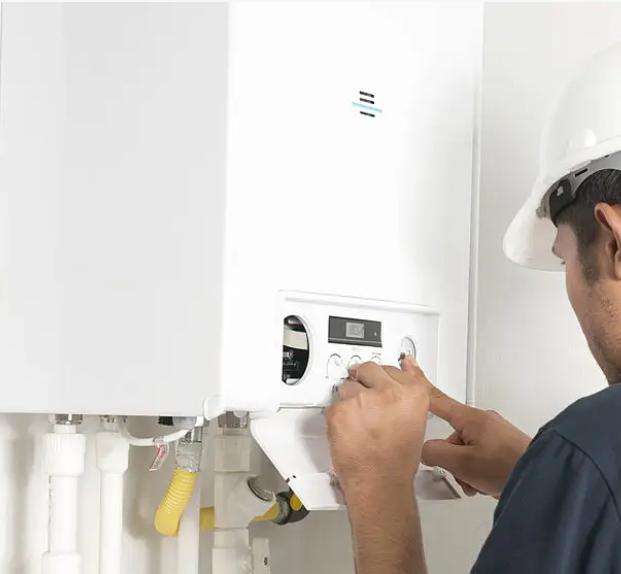
- Flush the tank to remove accumulated sediment — see water heater flush.
- Inspect the anode rod and flag it for swap once its core wire is largely exposed — details on our anode rod replacement page.
- Trip the temperature and pressure relief valve to confirm it still operates and that the discharge tube terminates where it should.
- Check the thermostat setting — typically 120°F.
- Check fittings and the tank base for the first hint of rust streaking or dampness.
- On gas units, look at burner and flame pattern, clear the dust that collects on the combustion-air screen in I-15 corridor garages, and confirm the vent is drafting properly.
- On electric units, test elements and thermostats for scale buildup and confirm they're cycling correctly.
- Check the expansion tank pre-charge against current line pressure where one is installed.
Why It Matters More With Mineral-Rich Water
Every heating cycle drops a bit of calcium and magnesium out of solution. On a gas tank it piles up on the floor directly above the burner, forcing the flame to work through an insulating layer before any heat reaches the water. On an electric tank the same minerals bake onto the heating elements, and on a tankless unit they narrow the passages inside the heat exchanger.
The change is gradual, so most homeowners don't notice it week to week. Given a few years, though, it shows up as a higher gas or electric bill, shorter hot showers, popping sounds from the tank, and a unit that gives out well before its rated lifespan.
A Simple Homeowner Maintenance Schedule
Monthly (two minutes)
Glance at the tank base and its connections. Catching moisture, rust streaking or a mineral crust early is far cheaper than dealing with a flooded garage later.
Every six months
Stand near the unit while it fires. A new rumble or pop is sediment accumulating on the tank floor.
Annually
This is when a flush, a relief-valve test and an anode check should all happen together; tankless owners should schedule a descaling instead.
Every three to five years
Budget for a new anode rod on this cycle, and shorten it if a water softener is installed, since softened water eats through the rod faster.
Maintenance and Your Warranty
Most tank warranties are written with an expectation of routine upkeep, and tankless manufacturers often spell out exact descaling intervals in their fine print. Jotting down service dates costs nothing and can be the difference-maker if you ever need to file a claim. On a unit already near or past its rated life, keep servicing it, but also look at water heater replacement so you're choosing the timing instead of waiting for a failure to choose it for you.
An Annual Service Plan Built for Hard Water
Maintenance matters more in Temecula than in most of the country because of mineral content. A yearly flush plus an anode check is the difference between a tank that reaches twelve years and one that fails at eight. If your home has a softener, spacing service further apart is reasonable; if it does not, keep it annual.
Dust is the other local factor. Garages along the I-15 corridor and homes near open ground in Winchester and French Valley collect fine dust that clogs the combustion-air screen at the base of a gas heater, causing nuisance shutdowns that look like a bad thermocouple.
- Yearly flush timed to local water hardness
- Anode rod inspection from year three
- Combustion-air screen cleaning for dusty garages
- Expansion tank pressure check against RCWD or EMWD line pressure
Related Water Heater Services
Water Heater Flush
The core of an annual service visit.
Anode Rod Replacement
The sacrificial part that keeps rust off the tank shell.
Water Heater Repair
Called in when a service visit turns up a real fault.
Tankless Water Heaters
Yearly descaling keeps on-demand units running at rated output.
Temecula-Area Communities We Cover
Scheduled service is available to homeowners throughout Temecula and the surrounding cities below.
- Murrieta, CA
- Menifee, CA
- Wildomar, CA
- Lake Elsinore, CA
- French Valley, CA
- Winchester, CA
- Fallbrook, CA
- Canyon Lake, CA
- Sun City, CA
- Bonsall, CA
- Hemet, CA
The Annual Service Checklist, Item by Item
Flush and sediment removal
Draining until the discharge runs clear removes calcium carbonate scale that insulates the burner floor and raises stack temperatures. In 15-to-25-grain water, once a year is a minimum, twice a year is better.
Anode inspection
The anode is pulled with a 1-1/16-inch socket and replaced when more than about six inches of core wire is exposed. Magnesium gives the strongest protection; aluminum-zinc suits water that produces sulfur odor.
Valves, venting and temperature
The T&P relief valve is exercised, the expansion tank pre-charge is checked against static pressure, draft and the flame pattern are verified, and the thermostat is set near 120°F to balance scald risk, Legionella control and scale formation.
Frequently Asked Questions
How often should a water heater be serviced?
Once a year is enough for most households. Homes on especially hard water, or running a tankless unit, sometimes do better checking in twice a year.
Can I flush the tank myself?
Plenty of homeowners do it themselves. The things to watch for are burns from hot discharge water, an aging drain valve that can fail to reseal, and sediment so heavy it calls for a pro with the right tools.
Does a water softener change maintenance needs?
It does. Softened water cuts down on scale buildup but eats through the anode rod more quickly, so those checks need to happen on a shorter cycle.
Can maintenance rescue a water heater that's already failing?
It can bring back lost efficiency and quiet down a rumbling tank, but it won't undo corrosion that's already taken hold or seal a shell that's leaking.
Does maintenance still make sense for an aging water heater?
On a tank nearing the end of its expected service life, pair maintenance with a replacement plan rather than leaning on it as a permanent fix.
What temperature setting should I use?
120°F works well for most homes, giving plenty of usable hot water while keeping scald risk and standby losses in check.
Request Help With Your Water Heater
Tell us a little about your home and the unit you have now, and a local technician will get back to you with pricing, no strings attached.
Not sure what's actually wrong? Pick Not Sure on the form and describe the symptoms — most homeowners calling in are figuring it out for the first time too.
Request Your Maintenance Quote
Share a few details about your system and we'll follow up with pricing, no obligation.