
Water Heater Anode Rod Replacement in Temecula, CA
Temecula Water Heaters inspects and replaces magnesium, aluminum-zinc and powered anode rods in Temecula, CA water heaters. Bolted through the top of the tank, this sacrificial magnesium or aluminum core is designed to dissolve first so the steel shell doesn't have to. Swap it out on a regular schedule and a Temecula water heater can keep running years past when it otherwise would; skip it and rust eventually finds the tank wall itself.
Request Your No-Cost Water Heater Estimate
Share a bit about your setup and we'll follow up with pricing at no cost to you.
How the Sacrificial Anode Protects Your Tank
Storage tanks are built from steel coated with a thin glass lining, and any hairline gap in that coating leaves bare metal sitting in hot water — a setup that invites rust. Because the anode rod is chemically more reactive than the tank shell, the corrosion current targets the rod first. So long as the rod still has sacrificial metal on it, the tank underneath stays protected.
When the rod finally wears down to its bare steel core, that protective effect disappears and corrosion shifts to the tank walls. From that point on, a slow-motion clock toward a future leak is already ticking, often with no outward warning for years.
When to Inspect and Replace
- First check-up around the three-year mark on Rancho California Water District or Eastern Municipal Water District supply, then roughly every two to three years going forward.
- Move the schedule up if a whole-house softener is installed — softened water accelerates rod wear noticeably.
- Time for a new rod once pitting is heavy or the core wire shows along most of its length.
- Worth investigating when hot water develops a sulfur or rotten-egg smell — a different rod alloy usually clears it up.
The simplest time to have it checked is during a routine annual tune-up or tank flush, since a technician is already working at the unit.
Rod Types and Choosing the Right One
| Type | Best suited to | Notes |
|---|---|---|
| Magnesium | Standard RCWD/EMWD tap water | Solid corrosion protection, though softened water shortens its lifespan |
| Aluminum / zinc alloy | Homes with a sulfur odor | Its zinc content generally cuts down the rotten-egg smell |
| Powered (impressed current) | Especially harsh water chemistry | Never wears away, but needs a nearby electrical outlet |
| Flexible / segmented | Tight attic or garage clearance | Bends into place where a straight rod won't clear the ceiling |
What the Job Involves
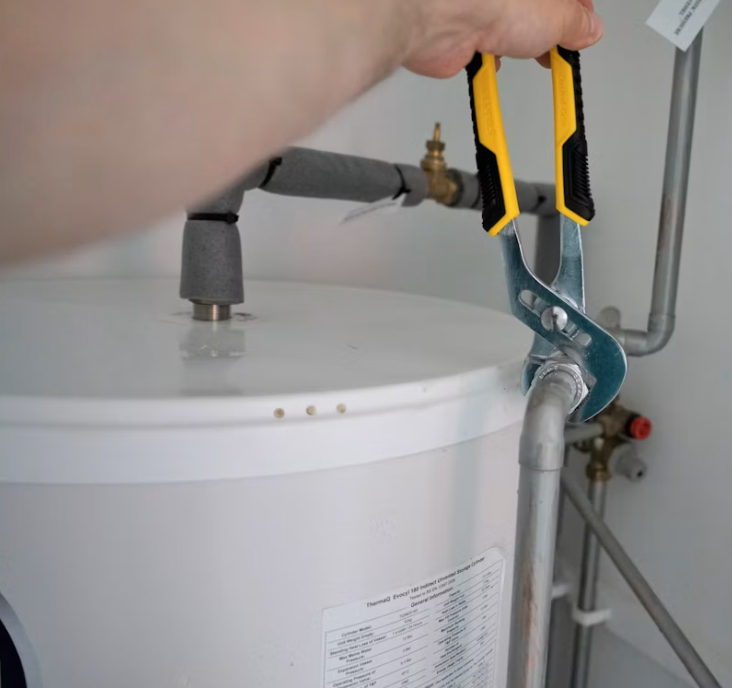
Our tech kills the gas or power along with the water supply, bleeds off pressure, then works the hex fitting on top of the tank loose — frequently the toughest part of the job, since a decade of mineral buildup can weld the threads tight. Certain models bury a combination anode inside the hot-water outlet fitting, which calls for a slightly different removal method. Once the replacement rod is threaded in with new sealant, the tank gets refilled and every joint is inspected for drips before we call it done.
For the low garage and attic ceilings typical of 1990s and 2000s Temecula tract homes, a jointed segmented rod gets the job done without relocating the heater.
Does Anode Replacement Still Pay Off on an Aging Tank?
For a unit less than roughly eight years old that shows no corrosion yet, absolutely — it's a low-cost way to buy extra service life. If a heater is already around twelve years in and rust has reached the fittings or the base, the rod can no longer catch up, and that money is generally better spent on replacement. One of our technicians can pull the rod, look over the tank, and tell you which scenario applies to your home.
Anode Rods and Temecula Water Chemistry
The anode rod is the sacrificial metal that corrodes so your tank does not. In hard, mineral-rich Southwest Riverside County water it depletes faster than the industry averages suggest, and in softened homes it goes faster still because softened water is more aggressive toward the rod.
Checking the rod at year three and replacing it once or twice can add years to a tank. Low-clearance garage and closet installs in Temecula often need a segmented flexible rod because there is no room to pull a full-length one straight up. Homes with a softener are usually better served by a powered aluminum-zinc rod, which also helps with sulfur odor.
- Rod inspection from year three in unsoftened homes
- Flexible segmented rods for tight garage and closet clearances
- Aluminum-zinc rods where a softener is installed
- Sulfur smell diagnosis tied to local water and rod type
Related Water Heater Services
Water Heater Maintenance
Bundle anode checks with annual service.
Water Heater Flush
Clears out mineral buildup from Temecula's hard water in the same appointment.
Tank Water Heaters
A closer look at how tank-style units are constructed.
Temecula-Area Communities We Cover
Our crews handle anode inspections and replacements throughout Temecula and the surrounding Riverside County communities listed below.
- Murrieta, CA
- Menifee, CA
- Wildomar, CA
- Lake Elsinore, CA
- French Valley, CA
- Winchester, CA
- Fallbrook, CA
- Canyon Lake, CA
- Sun City, CA
- Bonsall, CA
- Hemet, CA
Cathodic Protection in Practice
How the sacrificial anode works
Magnesium and aluminum sit above steel in the galvanic series, so the rod corrodes preferentially and the current it generates protects any exposed steel at pinholes in the glass lining. When the rod is gone, the tank becomes the anode.
Choosing the right rod
Magnesium for the strongest protection in typical hard water, aluminum-zinc where a sulfur or rotten-egg odor develops, and a segmented or flexible rod where the ceiling clearance above the tank is under four feet — common in Temecula garages and interior closets.
Replacement interval
Inspect at year three and every two years after. Softened water consumes anodes faster, so homes with whole-house softeners often need a rod every two to three years.
Frequently Asked Questions
What does an anode rod do?
It sacrifices itself so the tank doesn't have to. Since it's a more reactive metal than the steel shell, it draws the corrosion process toward itself instead of the tank walls.
How frequently does an anode rod need changing?
We recommend a first look around year three, then checking every couple of years after that. Given the hardness of Rancho California Water District and Eastern Municipal Water District supply, most Temecula rods actually get swapped every three to five years, sooner in homes with a softener.
Can I check the anode rod myself?
You can try, though the fitting is frequently corroded tight and freeing it takes real leverage along with draining the tank properly first. Most Temecula homeowners simply have it checked as part of a routine maintenance visit.
What causes a rotten-egg odor in hot water?
That smell typically comes from magnesium in the rod reacting with sulfate-reducing bacteria present in local well or municipal water. Switching to an aluminum-zinc rod usually eliminates it.
Can a new anode rod actually make a tank last longer?
Yes — few maintenance tasks tie so directly to how long a tank survives, since once the rod is spent, the corrosion process moves straight to the tank's own steel.
Do tankless water heaters have anode rods?
Generally no, since there's no storage tank for one to protect. A handful of hybrid units include one, but for most tankless systems, periodic descaling is the equivalent upkeep task, especially important given Temecula's roughly 15-20 gpg hard water.
Request Help With Your Water Heater
Tell us a little about your home and the water heater you have now, and we'll get back to you with a free, no-pressure quote.
Not sure which service applies to you? Pick Not Sure on the form and describe what's going on — plenty of homeowners are troubleshooting this for the very first time.
Request Your No-Cost Water Heater Estimate
Share a bit about your setup and we'll follow up with pricing at no cost to you.