
Water Heater Flush in Temecula, CA
Temecula Water Heaters flushes hard-water scale and sediment out of storage tanks and descales tankless heat exchangers in Temecula, CA. A flush clears out the calcium and magnesium sediment that hard water leaves behind in the bottom of a storage tank. It's about the cheapest service a water heater can get, and it's one of the rare ones that actually adds years to the unit rather than just fixing a symptom.
Request Your Flush Quote
Share a few details about your unit and we'll follow up with pricing, no obligation.
What Sediment Does to a Water Heater
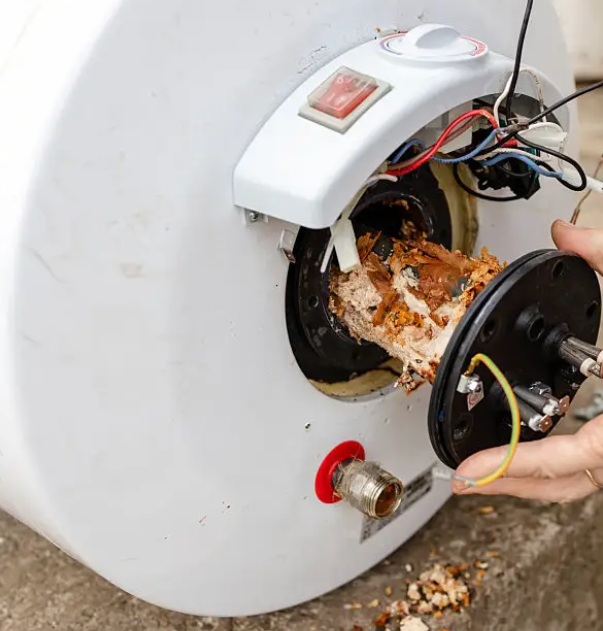
Rancho California Water District and Eastern Municipal Water District both supply water in the 15-20 gpg hard range, so every heating cycle leaves a trace of calcium and magnesium in the tank. Given a few years, that trace becomes a hardened crust across the bottom.
- Efficiency drops — a gas burner has to push heat through the sediment layer before any of it reaches the water above.
- Capacity shrinks — every gallon of sediment on the tank floor is a gallon of hot water you no longer get.
- Noise starts — the popping and rumbling homeowners notice is water flashing to steam trapped under the deposits.
- The tank is stressed — hot spots form under the sediment and chip away at the glass lining that keeps the steel from rusting.
- Electric elements scale — coated elements put out less heat and fail sooner.
What a Professional Flush Involves
- Shut off the heat source and give the water time to cool to a workable temperature.
- Shut the cold inlet and attach a garden hose to the drain valve.
- Crack a hot tap elsewhere in the house to break the vacuum, then let the tank drain.
- Pulse the cold supply back on in short bursts to churn up and flush out the settled sediment.
- Repeat until the discharge runs clear.
- Shut the drain, refill the tank, bleed air from the lines, then relight the pilot or restore power.
- Confirm the drain valve seals properly and that the relief valve is functioning.
A tank with years of buildup can clog its own drain valve partway through the job, which is why owners of older units often bundle the flush into a full annual maintenance visit handled by a professional.
How Often, and When to Skip It
Annually works for most homes in this region; stepping up to twice a year makes sense for households with unusually hard supply or heavy hot water demand.
Worth knowing: draining a tank that's gone twelve years without a flush can occasionally reveal a drain valve or fitting too corroded to reseal. On an older unit that's already showing rust, have a pro decide whether a flush or a replacement makes more sense for that visit.
Flushing Tankless Units Is Different
A tankless unit doesn't get drained; it gets descaled by circulating a cleaning solution through the heat exchanger via its isolation valves. The goal is the same — remove mineral buildup — but the method is different, and it's usually an annual job given local water hardness. See tankless water heaters.
Why Flushing Matters More Here
Water delivered through Rancho California Water District and Eastern Municipal Water District carries a heavy mineral load. In a gas tank, that settles as a hard crust on the floor above the burner; in an electric tank, it packs around the lower element. Either way you lose usable capacity and burn more energy for the same shower.
Homes without a softener in Temecula, Murrieta and Menifee should be flushed every year. Softened homes can often stretch to two years. Tankless units in this water need a proper descaling loop rather than a drain-and-fill.
- Annual flushing schedule for unsoftened Temecula homes
- Recovery-time gains after removing hard-water sediment
- Descaling procedure for tankless heat exchangers
- Whole-home softening as a way to slow the cycle
Related Water Heater Services
Water Heater Maintenance
Where a flush fits into the full annual checklist.
Anode Rod Replacement
The other piece that determines how long a tank lasts.
Tank Water Heaters
The mechanics behind storage-tank systems.
Water Heater Repair
For when the rumbling turns out to be something else.
Temecula-Area Communities We Cover
Flush appointments and full maintenance visits are booked throughout the communities below.
- Murrieta, CA
- Menifee, CA
- Wildomar, CA
- Lake Elsinore, CA
- French Valley, CA
- Winchester, CA
- Fallbrook, CA
- Canyon Lake, CA
- Sun City, CA
- Bonsall, CA
- Hemet, CA
Scale Chemistry and Flush Procedure
What is actually in the sediment
Mostly calcium and magnesium carbonate precipitated out of hard supply water when it is heated above roughly 140°F. Higher setpoints accelerate precipitation, which is one more reason 120°F is the recommended setting.
How a proper flush runs
Gas control to pilot or breaker off, cold inlet closed, hose to the drain valve, tank drained, then short bursts of cold inlet water to stir and carry out the settled layer until discharge runs clear.
Tankless descaling
A tankless unit is not flushed but recirculated: isolation valves, a submersible pump and a food-grade descaler circulated through the heat exchanger for 45 to 60 minutes to dissolve scale off the copper.
Frequently Asked Questions
How often should I flush my water heater?
Once a year is a solid baseline given local water hardness. Homes with especially hard supply or heavy hot water demand sometimes schedule it twice a year.
Will flushing fix my rumbling water heater?
Often, yes, since sediment is the usual cause of that noise. If the rumbling persists after a thorough flush, the deposits have likely hardened in place and it's worth having someone assess how much life the tank has left.
Can flushing damage an old water heater?
A sound tank won't be harmed, but flushing can uncover a weak point already there, like a drain valve that won't reseal or a corroded fitting. Better to find that during a scheduled visit than during a failure.
How long does a flush take?
Typically 30 to 60 minutes, running longer if the sediment load is heavy or the drain is slow.
Will a flush lower my energy bill?
It recovers efficiency that sediment had been eating away at. The bill savings tend to be modest, but you also get back capacity and extend the tank's working life.
Do tankless water heaters need flushing?
Not a flush exactly — they need descaling, where a circulated solution dissolves scale inside the heat exchanger, usually on a yearly schedule in hard-water areas like this one.
Request Help With Your Water Heater
Give us a bit of background on your home and current unit, and a local technician will reach out with a no-obligation quote.
Unsure what's going on? Select Not Sure on the form and describe the symptoms — most people reaching out are troubleshooting this for the first time.
Request Your Flush Quote
Share a few details about your unit and we'll follow up with pricing, no obligation.