
Gas Water Heaters in Temecula, CA
Temecula Water Heaters installs, vents and services natural gas water heaters, including ultra-low-NOx atmospheric and power-vent models, in Temecula, CA. Fast heating and quick recovery are why natural gas remains the go-to fuel for most Temecula-area households. That speed comes with combustion, venting and gas-supply requirements that have to be handled correctly, since these are the parts of the system where mistakes carry real safety consequences.
Get Your Free Water Heater Quote
Tell us about your water heater needs and we will send you a quote with no obligation.
Atmospheric, Power Vent and Condensing Gas Units
Atmospheric vent
The traditional design: hot combustion gases rise naturally through a draft hood and up the flue. It's a proven, low-complexity setup, but it depends on a working chimney or B-vent and an adequately ventilated space for combustion air.
Power vent
A powered blower forces exhaust through PVC pipe, commonly routed out a sidewall rather than up through a roof. That freedom is valuable in garages where the chimney is already serving a furnace, or where the heater sits far from an existing flue. A nearby outlet is required to run the power vent's blower.
Condensing / high efficiency
Condensing units pull extra heat out of the flue gas before it exits, which lets them vent in PVC and requires a condensate drain. They cost more to buy but burn less gas, and tend to make the most sense in bigger households with heavier hot-water demand.
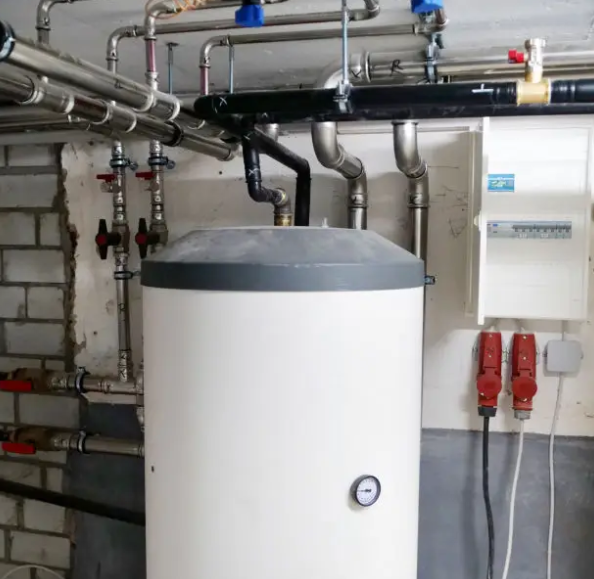
Venting, Combustion Air and Safety
Proper venting is what keeps a gas water heater safe to operate. Watch for these warning signs:
- Backdrafting — soot buildup around the draft hood, moisture beading on top of the tank, or a scorched smell when the burner ignites.
- Orphaned water heaters — once a home upgrades to a high-efficiency furnace that no longer shares the chimney, the water heater is left venting alone into a flue sized for two appliances, and it may never heat up enough to draft properly. We see this often in Temecula homes that have had furnace upgrades, and the fix is usually a liner or a switch to power venting.
- Tight utility rooms — sealing and insulating a garage can starve an atmospheric unit of combustion air.
Any home running gas appliances needs functioning carbon monoxide detectors. If you ever smell gas, get everyone outside first and call SoCalGas from a safe distance before contacting anyone else.
Common Gas Water Heater Problems
- Pilot won't stay lit — a worn thermocouple, a dirty pilot assembly, or a clogged air intake screen are the usual suspects.
- Burner short-cycling or a yellow flame — points to a combustion or venting problem that shouldn't be ignored.
- Slow recovery — usually sediment buildup insulating the tank bottom from the burner; a flush typically resolves it.
- Gas control valve failure — a frequent issue on aging units, and often the point where replacing the whole heater makes more sense than repairing it.
- Rotten-egg smell in the hot water — typically caused by a reaction between the anode rod and bacteria present in the water supply; see anode rod replacement.
For symptom-by-symptom detail, see water heater repair.
Replacing or Installing a Gas Water Heater
When gas, venting and drainage are already routed to the location, sticking with gas is usually the simplest replacement path. The job itself covers installing a sediment trap, a correctly rated shutoff valve, pressure-tested fittings, a fresh relief valve with discharge piping, and a draft check once the burner is running.
Weighing your options? See electric water heaters, tank water heaters and tankless water heaters, or begin with water heater replacement.
Gas Water Heaters in the Temecula Valley
Most of the valley is served by SoCalGas, and gas storage tanks remain the fastest, lowest-cost replacement for the majority of Temecula, Murrieta and Menifee homes. New units sold here must be ultra-low-NOx to satisfy South Coast Air Quality Management District rules, so a like-for-like swap of an older heater sometimes needs a vent or combustion-air correction to pass inspection.
Rural properties around Fallbrook, Bonsall and De Luz often run propane instead of natural gas. Propane needs a different orifice and regulator setup, and tank placement and clearances matter more on hillside lots with wildfire and Santa Ana wind exposure.
- Ultra-low-NOx burners required under South Coast AQMD
- Atmospheric versus power-vent choices for closet and interior installs
- Propane conversions for Fallbrook, Bonsall and De Luz properties
- Combustion air openings sized for garage installations
Related Water Heater Services
Water Heater Repair
Diagnosing pilot, burner and vent issues before they get worse.
Water Heater Installation
What code requires for venting and gas hookups.
Tankless Water Heaters
On-demand gas systems with no storage tank to run dry.
Temecula-Area Communities We Cover
We handle gas water heater installs and repairs across Temecula and the neighboring towns listed below.
- Murrieta, CA
- Menifee, CA
- Wildomar, CA
- Lake Elsinore, CA
- French Valley, CA
- Winchester, CA
- Fallbrook, CA
- Canyon Lake, CA
- Sun City, CA
- Bonsall, CA
- Hemet, CA
Combustion, NOx Rules and Venting Specifics
Ultra-low-NOx requirement
South Coast AQMD Rule 1121 limits residential water heater NOx emissions, so units installed here are ultra-low-NOx models rated at 14 ng/J or better. That rules out many national big-box SKUs and is a common reason an out-of-area unit fails inspection.
Combustion air and FVIR
Every atmospheric gas heater needs adequate combustion air — two openings sized to the total input, high and low — and an intact FVIR flame arrestor. A yellow, lazy or rolling flame points to a blocked arrestor or oxygen starvation, not a burner that needs replacing.
Recovery and first-hour rating
Gas recovery is the reason most Temecula households stay on gas: a 40,000 BTU/h, 50-gallon unit recovers roughly 40 gallons an hour and carries a first-hour rating near 80 gallons, enough for back-to-back showers in a four-bedroom plan.
Frequently Asked Questions
How long does a gas water heater last?
A storage-style gas unit typically lasts 8 to 12 years, though water hardness and how consistently it's maintained can shift that meaningfully in either direction.
Can I relight the pilot myself?
Most tanks have lighting steps printed right on the unit, and trying it once yourself is reasonable. If the pilot won't hold, stop there and call for diagnosis instead of repeatedly attempting to relight it.
What is an orphaned water heater?
It happens when a furnace on a shared chimney gets replaced with a high-efficiency model that vents separately, leaving the water heater venting solo into a flue that's now oversized for it. The result is often weak draft and condensation buildup, generally fixed with a liner or a power vent conversion.
Is a power vent worth the extra cost?
The added cost pays off when your venting situation demands it — no working chimney, a lengthy vent run, or wanting the unit somewhere away from the existing flue. Keep in mind it also needs power nearby.
What causes a sulfur or rotten-egg smell in hot water?
That smell usually comes from a reaction between the sacrificial anode rod and bacteria naturally present in the water. Swapping to a different anode material frequently clears it up.
Will a gas water heater still run when the power goes out?
Atmospheric units with a standing pilot will usually keep producing hot water without power. Power vent and electronic-ignition models, on the other hand, shut down entirely when the electricity goes out.
Request Help With Your Water Heater
Send a few details about your home and your current water heater. We will send you a quote with no obligation.
Not sure which service you need? Choose Not Sure in the form and describe what's happening, most homeowners are diagnosing the problem for the first time.
Get Your Free Water Heater Quote
Tell us about your water heater needs and we will send you a quote with no obligation.