
Water Heater Installation in Temecula, CA
Temecula Water Heaters installs storage tank, tankless and heat pump water heaters for homeowners in Temecula, CA and the surrounding Riverside County communities. Whether it's a new-construction rough-in, relocating the unit somewhere more convenient, or switching from tank to tankless, the small decisions made during install are what determine whether the system runs smoothly for the next ten-plus years. Below is what a properly executed install looks like for a Temecula-area home.
Get Your Free Water Heater Quote
Tell us about your water heater needs and we will send you a quote with no obligation.
New Installations vs. Replacement Installations
A replacement installation keeps the current water, gas and venting connections in place as long as they still pass code. It's the quickest job on the list and the one we see most often in older, established tracts like Meadowview and Chardonnay Hills.
A new installation — an addition, a finished garage bathroom, a garage shop sink, or a second heater for a far-away bathroom — has to run new supply lines, a new drain path for the relief valve, and a new vent or circuit. This kind of job demands more upfront planning, and labor — not the equipment itself — makes up most of the bill.
If your current unit is simply being swapped for a new one, our water heater replacement page walks through the decision-making side in more detail.
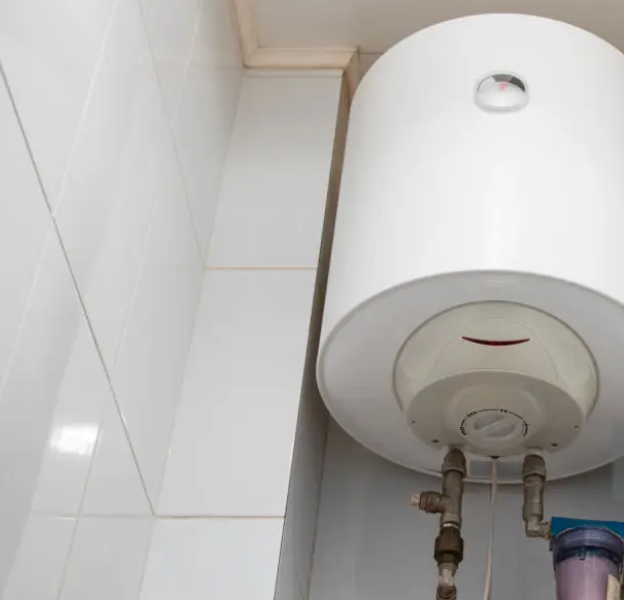
Tank, Tankless, Gas and Electric Installations
Tank system installs
These are the most straightforward jobs we handle. The tank sits on a platform or the garage floor, ties into the hot and cold lines with either flex connectors or rigid pipe, and, on gas units, vents through the flue that's already there. Wherever a leak could reach drywall or flooring, a drain pan plumbed to daylight is cheap insurance.
Tankless system installs
These mount to a wall and are far less forgiving of a sloppy install than a tank unit. Depending on the model, condensing units call for stainless steel or PVC venting, a condensate line routed through a neutralizer, isolation valves so the unit can be descaled later, and enough gas volume to fire properly. Getting the termination point and clearance distances right is every bit as important as the unit itself. See tankless water heaters.
Gas system installs
Atmospheric-vent units rely on natural draft through the chimney or flue; power-vent units use a blower and PVC through a sidewall, which opens up placement options in garages where the chimney is already busy with a furnace. Every gas hookup needs a sediment trap ahead of the valve, an accessible shutoff, and a leak test performed on each joint before the job is called done. See gas water heaters.
Electric system installs
There's no combustion air or venting to worry about, but the unit needs its own correctly sized circuit, and heat pump models additionally need enough open air volume around them plus a condensate line. Heat pump water heaters do best in a garage with several hundred cubic feet of space around them. See electric water heaters.
Proper Sizing Before Installation
Correct sizing is the quiet difference between an install that performs well and one that disappoints the homeowner for years. Two homes on the exact same Harveston cul-de-sac can call for completely different equipment depending on household habits.
| System | What gets sized | What throws it off |
|---|---|---|
| Storage tank | Gallon capacity and first-hour rating | Simultaneous showers, large soaking tubs, laundry timing |
| Tankless | Gallons per minute at your required temperature rise | Cold winter inlet water in Southwest Riverside County |
| Heat pump electric | Capacity plus surrounding air volume | Small closets, cold unconditioned spaces |
A thorough installer will ask about your morning shower schedule, bathroom count, and whether the household has ever run short on hot water — those details matter more for sizing than the square footage of the house.
Installation, Safety and Code Considerations
The details that keep the system safe are usually the ones no homeowner ever notices:
- T&P relief valve with its discharge line routed correctly — never capped, never downsized.
- Thermal expansion control any time a check valve or pressure regulator makes the plumbing a closed loop; that's the job an expansion tank does.
- Properly sized venting and enough combustion air for any fuel-burning unit.
- Dielectric fittings anywhere copper meets steel, slowing galvanic corrosion at the connections.
- Drain pan and reachable shutoffs so future service calls and leaks stay manageable.
- Permit and inspection wherever the local building department calls for one.
These are exactly the items a home inspector zeroes in on during a resale, which is reason enough not to shortcut them.
Water Heater Installation Rules and Conditions in Temecula
Installations inside Temecula city limits are permitted and inspected through the City of Temecula Building & Safety Division, while homes in French Valley, Winchester, Bonsall and other unincorporated pockets go through Riverside County or San Diego County. A replacement permit is inexpensive, and it is what puts the seismic strapping, T&P discharge line, venting and combustion air on record for your next home sale.
Most homes built through the Paloma del Sol, Vail Ranch, Redhawk and Chardonnay Hills eras put the heater in the garage on an 18-inch platform or in an upstairs hall closet over living space. Garage units need bollard protection where a car can hit them; closet units need a drain pan piped to daylight because a leak lands on drywall, not concrete.
- California Plumbing Code seismic strapping at the upper and lower thirds of the tank
- Thermal expansion tank where Rancho California Water District or Eastern Municipal Water District pressure regulators create a closed system
- Ultra-low-NOx gas models to meet South Coast AQMD district rules
- Pan and drain line for attic, closet and second-floor installations
Related Water Heater Services
Tankless Water Heaters
Conversion requirements and on-demand sizing.
Gas Water Heaters
Venting and gas supply for combustion units.
Electric Water Heaters
Circuits, elements and heat pump models.
Temecula-Area Communities We Cover
We route installation requests to pros already working throughout Temecula and these neighboring communities.
- Murrieta, CA
- Menifee, CA
- Wildomar, CA
- Lake Elsinore, CA
- French Valley, CA
- Winchester, CA
- Fallbrook, CA
- Canyon Lake, CA
- Sun City, CA
- Bonsall, CA
- Hemet, CA
Installation Standards, Materials and Code Details
Materials used on a compliant install
A correct installation is more than a tank swap: dielectric or brass nipples to break galvanic contact between copper and steel, braided stainless flex connectors, a full-port brass ball valve on the cold inlet, a sediment trap on the gas drop, and a T&P discharge line in hard-drawn copper or CPVC terminating within six inches of the floor.
Expansion, seismic and clearance requirements
Rancho California Water District meters carry check valves, which creates a closed system, so a properly pre-charged thermal expansion tank is matched to static line pressure. Two seismic straps are anchored in the upper and lower third of the tank per California Plumbing Code, garage installs are raised or FVIR-rated for ignition source clearance, and combustion air openings are sized to the burner input in BTU/h.
Venting and draft on replacement installs
Atmospheric Type B vent connectors get a proper rise and slope, common-vented systems are re-checked for draft after a high-efficiency furnace is added, and power-vent and direct-vent models are run in listed PVC with correct termination clearances.
Frequently Asked Questions
How long does water heater installation take?
Expect roughly two to four hours for a standard tank swap. Tankless conversions or moving the unit to a new spot usually run six hours to a full day since venting, gas line, or electrical changes are part of the scope.
Is it possible to relocate a water heater during installation?
Often yes. Relocating a heater involves extending supply lines, giving the relief valve a proper drain route, and rerouting the vent or circuit — all achievable, but it changes both the scope of work and the price.
Do I need an expansion tank?
Homes with a pressure-reducing valve or backflow preventer on the service line have a closed plumbing system, and thermal expansion has to be given somewhere to go. That's precisely why an expansion tank shows up on so many Temecula-area install quotes.
What temperature should a new water heater be set at?
120°F is the typical default — high enough for everyday household needs while limiting both scald risk and standby energy loss. Some households with particular medical needs run it hotter and pair that with a mixing valve at the fixture.
Is a permit required for installation?
Permit rules differ depending on which Temecula-area jurisdiction your home falls under. A qualified installer should confirm the local requirement and pull the permit and schedule the inspection on your behalf when one applies.
Can I install a water heater myself?
Gas connections, venting, and electrical work all carry genuine safety and code stakes, and doing it yourself can void the manufacturer's warranty. For most homeowners, having a licensed pro handle the job is the safer and more cost-effective route.
Request Help With Your Water Heater
Tell us a little about your home and the water heater you currently have. We will send you a quote with no obligation.
Not sure which service fits your situation? Pick Not Sure on the form and just describe the situation — plenty of homeowners are weighing this decision for the first time.
Get Your Free Water Heater Quote
Tell us about your water heater needs and we will send you a quote with no obligation.